0 to 80 in 30 minutes
Everyone's posting their "I built this in 30 minutes" demos. Nobody's posting the 30 hours that came after.
Read more ›
I’m going to tell you something slightly uncomfortable about the business I co-founded.
Reboxed has a great brand. I’m proud of it. We’ve built something that feels premium, trustworthy, sustainable, and distinct. People recognise us. People trust us. People choose us over competitors and come back for more. By most measures, the brand is working.
But here’s the tension I think about more than almost anything else. When a customer comes to Reboxed, what are they actually coming for? Are they coming because they love Reboxed? Or are they coming because they want an iPhone and Reboxed happens to be a good place to get one?
The honest answer, if I’m being brutal with myself, is that it’s mostly the second thing. The customer’s desire chain starts with Apple, not with us. They want an iPhone. They’ve decided on that before they ever encounter our brand. Reboxed enters the picture as the how, not the why. We’re the route to the thing they already want. We’re not the thing itself.
That realisation hit me harder than I expected. And it sent me down a rabbit hole about brand, product, and power that I think is one of the most important things any founder can understand - especially if you’re building a design-led business around someone else’s product.
The more I thought about this, the clearer a distinction became. There are fundamentally two types of brand in the world, and they operate on completely different physics.
Type one: product creators. These are brands where the brand and the product are inseparable. Apple is the obvious one. When you buy an iPhone, you’re buying Apple. The brand is the desire engine. Nobody walks into a shop wanting “a premium smartphone” and then discovers Apple. They want Apple. The brand creates the want.
Nike works the same way. You’re not buying “running shoes” and then choosing Nike as your preferred distributor. You’re buying Nike. The brand is the product is the desire. Same with Tesla. Same with Dyson. Same with any brand where the name and the product are fused into a single thing that people actively seek out.
Type two: product distributors. These are brands that sit between the product creator and the customer. Retailers, marketplaces, resellers, recommerce platforms. They can be excellent brands - trusted, recognisable, beloved even. But they don’t own the product meaning. They borrow it.
Reboxed is a type two brand. So is Amazon, frankly. So is John Lewis. So is every retailer and reseller on earth, regardless of how strong their brand is. The customer’s primary desire is for the product, not the distribution layer. The distribution layer adds value - trust, convenience, price, sustainability, experience - but it doesn’t create the core want.
This isn’t a value judgment. Type two brands can be enormous, profitable, category-defining businesses. But they are structurally different from type one brands, and understanding that difference changes how you think about everything from marketing to product strategy to long-term defensibility.
I’ve started thinking about this in terms of gravity. A type one brand has its own gravitational pull. People are drawn to it. The brand exerts force on the market. Apple doesn’t need to convince you that you want a smartphone - it makes you want an Apple smartphone specifically. The brand is the centre of its own solar system.
A type two brand orbits someone else’s gravity. Reboxed orbits Apple’s gravity. Our customers come to us because Apple’s gravity pulled them toward iPhones, and then our brand gave them a reason to buy that iPhone from us rather than somewhere else. We have our own gravitational pull - trust, sustainability, price, experience - but it’s weaker than Apple’s, and it only works on people who’ve already been captured by Apple’s field.
This has real implications for how you build and grow a business.
When Apple launches a new iPhone, our traffic spikes. When Apple’s brand has a good year, we benefit. When Apple’s desirability dips (rare, but it happens), we feel it immediately. We don’t control the demand signal. We intercept it. And that’s a fundamentally different strategic position to being the one who creates the signal in the first place.
So if we don’t own the product meaning, what do we own? This is the question I’ve been wrestling with, and I think the answer is more interesting than it initially appears.
Trust in a specific context. Apple can tell you the iPhone is great. But Apple can’t tell you that a refurbished iPhone is just as great. That’s our job. Reboxed owns the trust layer around refurbishment specifically - the belief that a pre-owned device can be premium, reliable, and worth buying. Apple doesn’t play in that space. Their entire brand is built on new, shiny, out-of-the-box perfection. The refurbished narrative is ours to own, and it’s a meaningful one because it reframes the purchase decision entirely.
The values layer. Sustainability, circular economy, conscious consumption. These aren’t Apple’s brand pillars. They’re ours. A customer who cares about reducing electronic waste, who wants to make an environmentally better choice without compromising on quality - that customer’s desire chain might actually start with Reboxed, not Apple. Not “I want an iPhone and Reboxed is a good place to get one” but “I want to buy refurbished because I believe in it, and Reboxed is the brand I trust to do it right.” That’s a different kind of gravitational pull, and it’s one we genuinely own.
The experience layer. How it feels to buy from us. The unboxing. The customer service. The warranty. The peace of mind. Apple owns the product experience, but we own the purchase experience. And for refurbished specifically, the purchase experience matters enormously because the customer is taking a perceived risk. Our brand exists to eliminate that risk and make the whole thing feel good.
None of these are as powerful as owning the product itself. I’m not going to pretend otherwise. But they’re real, they’re defensible, and they compound over time.
Here’s why I think this framework is useful beyond Reboxed.
A lot of founders - especially design-led founders who care deeply about brand - pour energy into building beautiful, distinctive brands without thinking clearly about which type of brand they’re actually building. And that matters because the strategies are completely different.
If you’re a type one brand, your job is to create desire. Your brand IS the product. Every piece of marketing, every design decision, every customer touchpoint should reinforce the connection between your brand and the thing you make. You control the demand signal. Your moat is the emotional and cultural meaning you’ve attached to your product.
If you’re a type two brand, your job is to intercept and redirect desire that already exists. You can’t create the want for iPhones. Apple does that. What you can do is create a compelling reason for people who already want iPhones to buy them from you specifically. Your moat is trust, experience, values, and operational excellence - not product meaning.
The mistake I see founders make constantly is building a type two business with type one brand thinking. They invest heavily in brand awareness, in top-of-funnel marketing, in trying to make people desire their brand - when the customer’s actual desire is for someone else’s product. That money is better spent on the things type two brands actually own: trust signals, purchase experience, values alignment, and operational quality.
The other mistake is feeling defeated by being type two. Thinking that because you don’t own the product meaning, your brand doesn’t matter. It does. Enormously. It’s just a different kind of mattering, and it requires a different kind of strategy.
So what does this mean for us? Where does understanding this leave me?
Honestly, it’s been liberating. Once you stop trying to compete with Apple’s brand gravity and start thinking about what you uniquely own, the strategy gets much clearer.
We’re doubling down on the things we genuinely control. The trust layer around refurbishment. The sustainability narrative. The operational excellence that means every device we sell is properly graded, properly tested, and backed by a real warranty. The customer experience from first click to twelve months after purchase. The feeling that buying refurbished from Reboxed isn’t a compromise - it’s a better choice.
We’re also thinking hard about where the line between type one and type two might blur. Could Reboxed ever become a brand that people seek out before they’ve decided on a specific product? Could someone come to us thinking “I want to buy refurbished” rather than “I want an iPhone” - and let us guide them to the right device? That’s a type one behaviour. That’s our brand creating demand rather than intercepting it. And I think there’s a real path there, especially as sustainability becomes a more central purchasing motivation for more people.
But I’m also clear-eyed about the structural reality. As long as our primary product is iPhones, Apple’s gravity will always be stronger than ours. That’s not a failure. That’s physics. And fighting physics is a waste of energy. Understanding it and building around it - that’s strategy.
If I could leave you with one thing from this piece, it’s this: sit down and honestly assess which type of brand you’re building. Don’t answer with what you want it to be. Answer with what it actually is, right now, in the eyes of your customers.
If you’re type one - if your brand is the product, if people seek you out specifically - then protect that position with everything you’ve got. It’s rare and it’s powerful and it’s the best moat in business.
If you’re type two - if you’re a distribution layer, a reseller, a marketplace, a platform that sits between someone else’s product and the end customer - then stop trying to be type one. Lean into what you actually own. Build the best trust layer, the best experience, the strongest values proposition in your category. That’s where your brand equity lives, and it’s more defensible than you think.
And if you’re somewhere in between, figuring out which way you’re heading - welcome to the most interesting brand strategy question there is. That’s where I am right now with Reboxed. I don’t have it all figured out. But at least I know what problem I’m solving.
The brands that win aren’t the ones with the best logos or the slickest websites. They’re the ones that understand what kind of gravity they have and build accordingly.
Everyone's posting their "I built this in 30 minutes" demos. Nobody's posting the 30 hours that came after.
Read more ›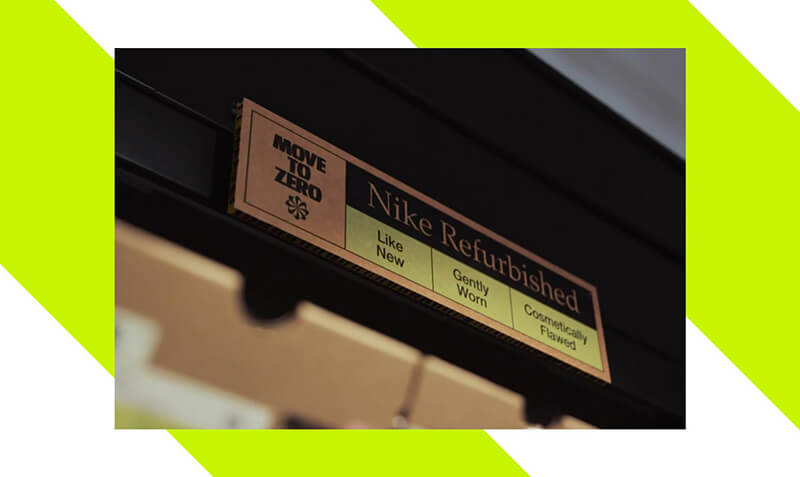
Nike are going full circle. Kinda. Nike launches the "refurbished sneaker program" aiming to give used sneakers a chance at a second life.
Read more ›
In the early days of content production, teams spent endless time and money on a single piece of content. Here's how to stop a thumb in its tracks.
Read more ›Notes on building and designing products in the agentic age, where taste is the edge. Join 20,000 people getting them, direct to your inbox.